Dennis G. Jarvis, CC BY-SA 2.0, via Wikimedia Commons
The Gaelic-speaking people of the Scottish Highlands scraped out a living on small tenant farms. Beginning in 1750 the landlords, mostly English, decided they needed more income from their lands and began what is known as the Highland Clearances, replacing the Scottish farmers with sheep. The Highland Scots were poor, illiterate people to begin with and the clearances left them destitute.
Promoters made promises of free passage to the new world, the opportunity to own their own land, and one year’s free provisions. The first ship that brought Scottish Highlanders to what is now Nova Scotia (New Scotland) was the Hector, with 189 passengers, mostly from Loch Broom. The voyage took 11 weeks and arrived near what is now Pictou on September 15, 1773.
They arrived in an unsettled land, dominated by huge, tall trees that would need to be cleared before they could hope to begin farming. The one year’s free provisions never arrived. Without the help of the native Mi’kmaq people they would not have survived the first winter.
Yet they held on and made this land their own. Another 50,000 Highland Scots arrived over the next 100 years. Those tall trees were recognized as ideal material for the masts of sailing ships and became a source of income.
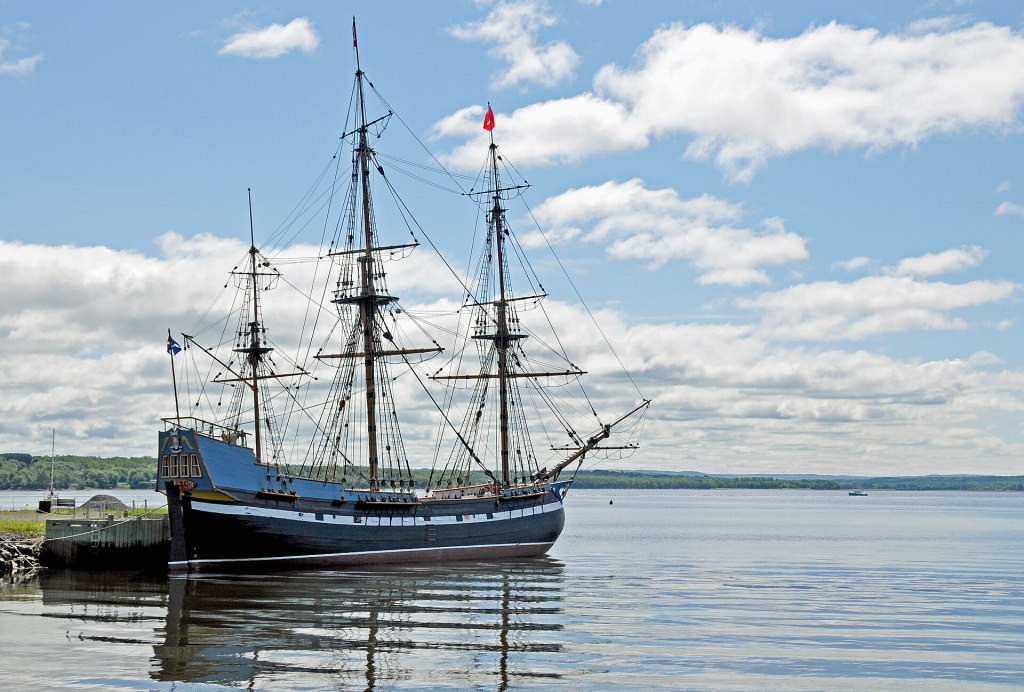
A replica of the Hector was built in the late 1990s and now sits in Pictou hatbour. There is a three storey interpretive centre nearby depicting the history of the Highland Clearances, conditions on board trans-Atlantic sailing ships, and the life of the Mi’kmaq people.


