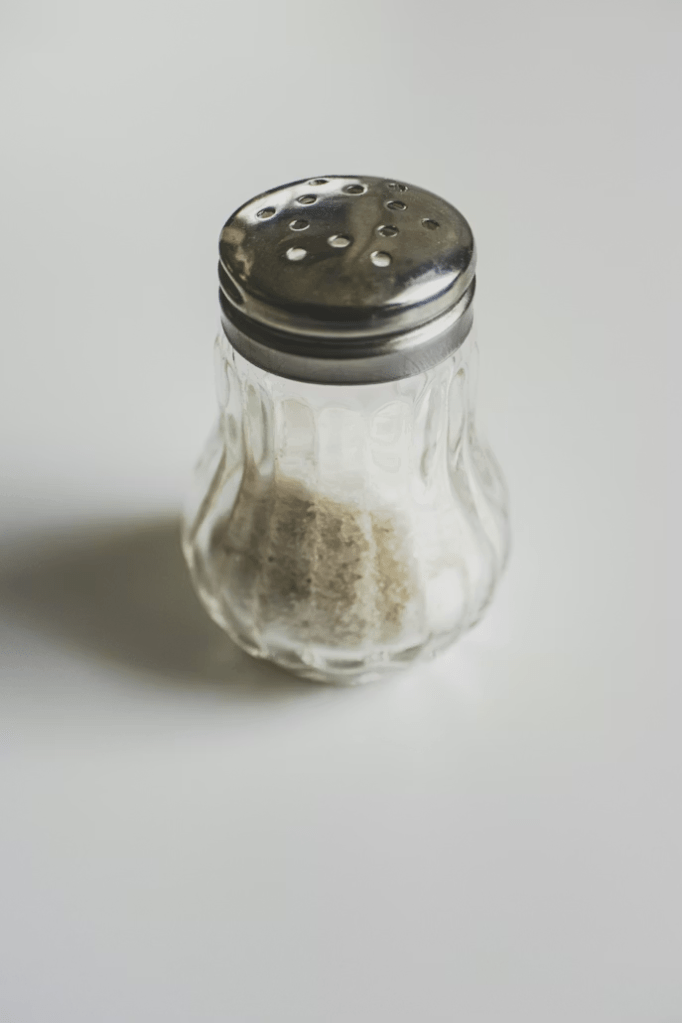
About 30 years ago we attended a family reunion in Massachusetts. For supper one evening, we were served succotash to acquaint us with the type of food available to our ancestors upon their arrival in 1638. Succotash consists of corn and lima beans, native North American vegetables cultivated by the Narragansett people of the area, boiled and served without any sort of flavour enhancer. It was no doubt nutritious, but to our modern tastes a pinch of salt would have improved it.
We are accustomed to thinking of salt as a flavour enhancer, but for millennia it was the only known means of preserving food. Vacuum-sealed canning was a 19th century invention and refrigeration was not available until the 20th century. The Israelites were commanded to add salt to all their offerings (Leviticus 2:13). It would be unthinkable to offer something to God that had begun to putrefy, and salt was the only means to prevent that from happening.
This is the symbolic meaning of the Apostle Paul’s instruction in Colossians 4:6: “Let your speech be alway with grace, seasoned with salt”. He does not mean that the words of a Christian should be seasoned to make them more tasteful, but that they should be cleansed of all impurity. The apostle says the same thing in different words in Ephesians 4:29: “Let no corrupt communication proceed out of your mouth”. Of course, purified speech has the added benefit of being more tasteful, but the emphasis is on purity.
When someone says of another person “You have to take what he says with a pinch of salt,” the meaning is similar. The words spoken by this other person are probably a mixture of the trustworthy and the untrustworthy and you need to sprinkle salt on them as you listen to eliminate the untrustworthy.
The familiar expression of rubbing salt into a wound is understood to mean to treat a wounded person with cruelty, but it originally had a therapeutic purpose. In the days before antibiotics, salt was the most effective way of preventing infection in a wound. Nevertheless, it would have been excruciatingly painful and that is the part that we think of today.
 Flatlander Faith